
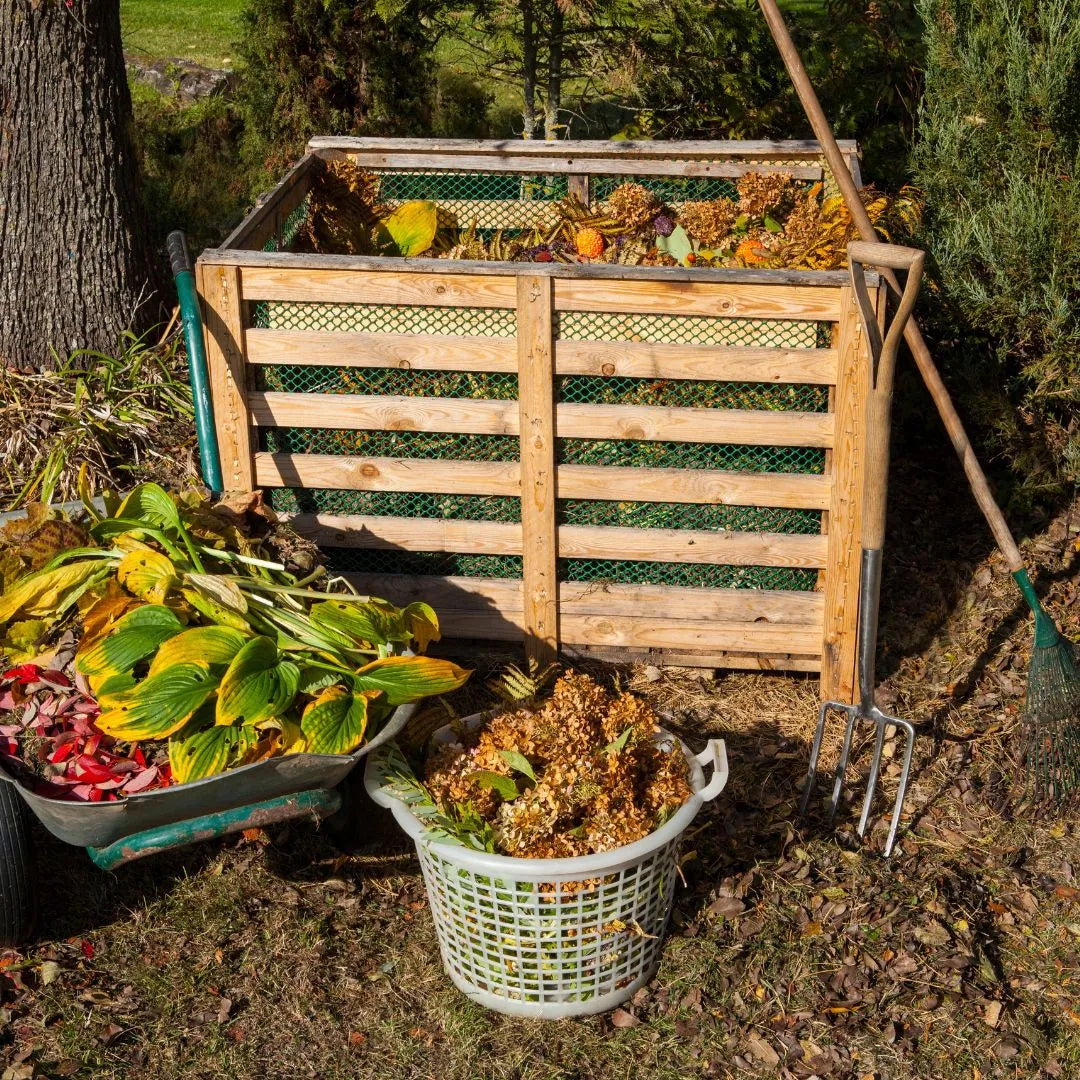
Composting is an eco-friendly way to recycle organic waste and enrich your garden soil. By creating a DIY compost bin, you can turn kitchen scraps and yard waste into nutrient-rich compost that will improve your soil’s structure and fertility. In this blog, we’ll guide you through building a compost bin using materials you can find at your local hardware store.
Materials Needed
- Wooden pallets or treated lumber
- Chicken wire or hardware cloth
- Hinges and a latch (if making a bin with a lid)
- A saw and hammer or power drill
- Nails or screws
- Measuring tape
- Shovel or pitchfork
- Compostable materials (kitchen scraps, yard waste)
Step 1: Choosing the Right Location Select a suitable location for your compost bin. It should be in a well-drained area that receives partial sunlight. Avoid placing it too close to your home or outdoor living spaces to minimize odors and pests.
Step 2: Deciding on the Bin Design There are various compost bin designs, ranging from simple open piles to more elaborate bins with multiple compartments. For this DIY project, we’ll focus on a basic wooden bin with a hinged lid. This design is sturdy, easy to build, and provides easy access for turning and harvesting compost.
Step 3: Measuring and Cutting the Wood Decide on the size of your compost bin. A common size is 3 feet by 3 feet, which is large enough to compost effectively but small enough to manage. Use a measuring tape to mark the wood, and then cut it to size using a saw. If you’re using pallets, they may already be the perfect size.
Step 4: Assembling the Bin Start by assembling the frame of the compost bin. Use screws or nails to attach the wooden boards together, forming a box-like structure. If you’re using pallets, you can secure them with screws at the corners. Attach the chicken wire or hardware cloth to the sides to allow for airflow while keeping the compost contained.
Step 5: Adding the Lid (Optional) If you want a bin with a lid, cut a piece of wood to fit the top of the bin. Attach it with hinges, so it can be easily opened and closed. Add a latch to keep the lid secure. A lid will help keep pests out and retain moisture.
Step 6: Filling the Compost Bin Now that your compost bin is built, it’s time to start composting! Begin by adding a layer of coarse materials like twigs or straw at the bottom to aid in drainage. Then, start layering green materials (kitchen scraps, grass clippings) with brown materials (dry leaves, paper). Aim for a balance of roughly 50% green and 50% brown materials.
Step 7: Maintaining the Compost
Maintaining your compost bin is key to producing high-quality compost. Here are some tips:
-
Turn the Compost Regularly: Use a shovel or pitchfork to turn the compost every few weeks. This aerates the pile and speeds up the decomposition process by introducing oxygen to the microbes breaking down the materials.
-
Monitor Moisture Levels: The compost pile should be moist, like a wrung-out sponge, but not soggy. If it’s too dry, add water or more green materials. If it’s too wet, mix in more brown materials, like dry leaves or straw, to absorb the excess moisture.
-
Chop Up Large Pieces: Cutting or breaking down larger pieces of organic waste into smaller bits will help them decompose faster. This includes kitchen scraps like vegetable peelings or yard waste like branches and leaves.
-
Watch for Pests: A properly managed compost bin shouldn’t attract pests, but if you notice rodents or other animals, ensure your bin is secure. Avoid adding meat, dairy, or oily foods to your compost, as these can attract unwanted visitors.
-
Be Patient: Composting is a natural process that takes time. Depending on the materials and conditions, it may take several months for your compost to be ready to use. When the compost is dark, crumbly, and has an earthy smell, it’s ready to be added to your garden.
Step 8: Using Your Compost
Once your compost is fully decomposed and ready, it’s time to put it to good use in your garden:
-
Soil Amendment: Mix the compost into your garden soil to improve its structure, increase nutrient content, and boost its ability to retain moisture. This is particularly beneficial for vegetable gardens and flower beds.
-
Top Dressing: Spread a layer of compost around the base of plants, trees, and shrubs as a top dressing. This will slowly release nutrients into the soil as it breaks down further, helping your plants thrive.
-
Mulch: Use compost as a mulch to suppress weeds, retain moisture, and moderate soil temperature. Apply a thick layer around your plants, being careful not to pile it directly against the stems or trunks.
-
Compost Tea: Create a nutrient-rich compost tea by steeping a bag of compost in water for a few days. This liquid fertilizer can be used to water your plants, giving them a quick boost of nutrients.
Conclusion
Building a DIY compost bin is a rewarding project that contributes to a sustainable and healthy home garden. By recycling your organic waste, you’re not only reducing your environmental impact but also creating a valuable resource for your garden. With some basic materials from your local hardware store, you can start composting today and enjoy the benefits of rich, fertile soil for your plants.
Whether you’re a seasoned gardener or a beginner, composting is an easy and effective way to enhance your garden’s productivity. So head to your hardware store, gather your materials, and start building your compost bin. Your garden will thank you!